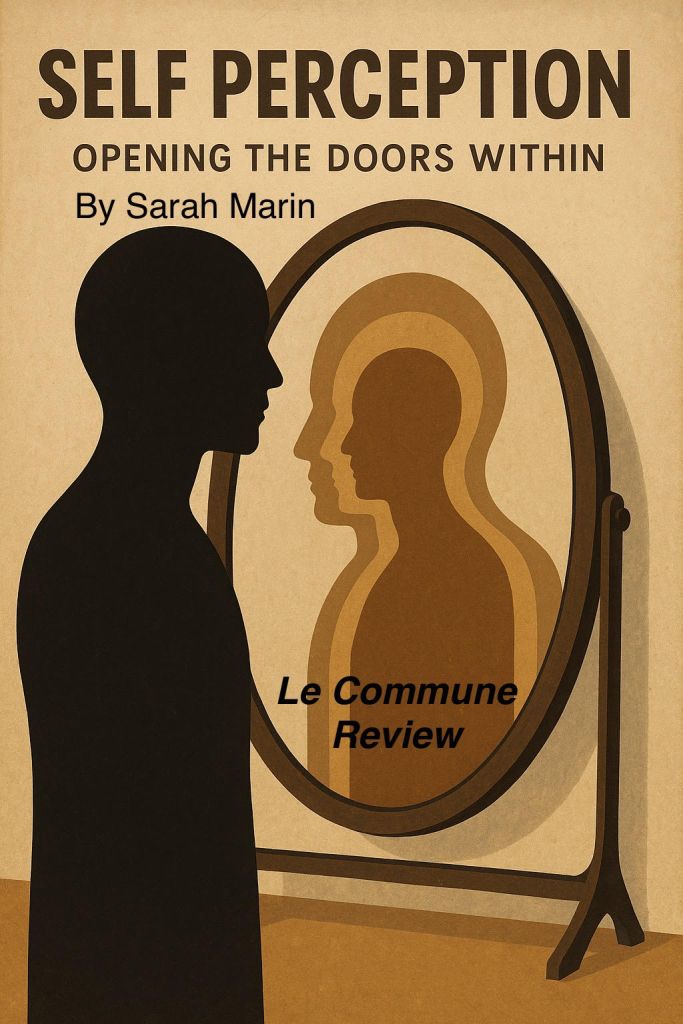
By Sarah Marin
What does it really mean to know yourself? We often spend our lives chasing careers, relationships, and healing, rarely stopping to ask, “Who am I beneath it all?” True self-discovery takes courage. It demands that we look inward with honesty, even when what we see is uncomfortable. Through meditation and introspection, I’ve peeled back the layers of who I thought I was. And while I’m still discovering new parts of myself, I’ve come to realize: nothing has cracked me open quite like love.
Many aspects of life can contribute to learning more about oneself. Everyday experiences, human interactions, and mindfulness practices all open doors to deeper understanding. Yet the one experience that has brought out the most untouched vulnerability for me, that has made me feel euphoric one minute and woeful the next, has been being in a relationship.
At forty-four, I find myself in my most stable and healthy relationship. I had only two long-term ones prior to this, each with its own lessons. But this relationship is different. It has brought me to emotional and psychological depths I did not know existed. It has been the most self-actualizing experience of my life. I used to think I knew who I was, what I liked, what I didn’t, how I would live my life. But this relationship has pushed me into uncomfortable spaces that have challenged those fixed ideas. It is in that discomfort that I have grown the most. I discovered that I was clinging to an image of myself: firm, unyielding, certain. But facing the truth of my imperfections has opened a door to transformation.
When you love someone deeply, you will find any way possible to make it work. That may mean admitting you are wrong, recognizing that winning an argument is meaningless, and learning to let go of ego-driven emotions. Love requires humility and self-awareness.
We are all shaped by our upbringing. We are given a name at birth, shaped by our parents, families, and schools. We are told who we are before we have a chance to find out for ourselves. During those formative years of self-discovery, our preferences and identities are often defined for us. As adults, we carry the imprint of these early experiences, along with the trauma and circumstances that have shaped us. But we do not have to be bound by them.
I am currently reading Shannon Lee’s Be Water, My Friend. She is the daughter of Bruce Lee, and her reflections have resonated deeply with me. In one chapter, she shares a story about her struggle with food addiction. She realized that her compulsion to soothe herself with food began after her father’s funeral. At that traumatic moment, she had received candy and associated that comfort with food from then on. That realization gave her clarity about a long-held behavior.
This relationship has been that realization for me. It has been like telling a story to a friend and suddenly understanding the root of a behavior. It has revealed doors of perception that helped me understand why I do what I do, or say what I say. These moments of awareness have helped me trace my thoughts and behaviors back to their origins. And in doing so, I now have the opportunity to break old patterns. Recognizing the circle is the first step; the second is deciding to break it.
Our childhood experiences, whether nurturing or neglectful, leave imprints. But they don’t have to define us. We have the power to look back, to understand, and to choose differently. For me, this relationship has become more than a partnership—it has become a mirror, revealing the hidden corners of my being. In its reflection, I’ve found clarity, humility, and the courage to evolve. That is the quiet power of love: not to complete us, but to awaken what has always been within us, waiting to be seen.
 Le Commune Review
Leave a comment