By Sarah Marin
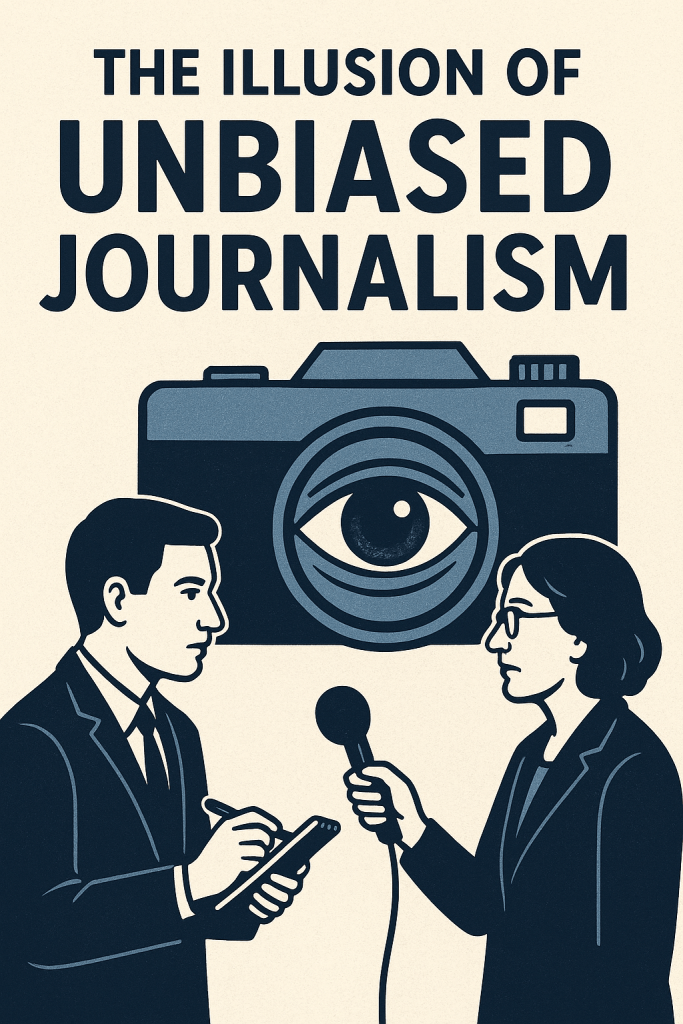
In The Dogs Bark, Truman Capote offers an incisive reflection on the nature of truth in media: “Journalism … can never be altogether pure—nor can the camera, for after all, art is not distilled water: personal perceptions, prejudices, one’s sense of selectivity pollute the purity of the germless truth.” This statement challenges the persistent claim of objectivity that many media outlets and magazines make. While news organizations often insist their reporting is unbiased, the very act of selecting, framing, and presenting a story inevitably reflects the individual writer’s perceptions and worldview.
Capote’s analogy to photography is particularly apt. A camera, often perceived as an impartial tool, captures only what is in the frame—determined entirely by the photographer’s choice of focus. Similarly, a journalist decides which sources to consult, which quotes to include, and which details to highlight. These choices, conscious or unconscious, shape the story. Even the order in which facts are presented can guide the reader toward a certain interpretation. In this way, journalism mirrors photography: both are filtered through the eyes of the beholder.
In theory, objectivity in journalism suggests a neutral stance, free of personal bias. In practice, however, neutrality is nearly impossible to achieve. Every journalist carries their own background, beliefs, and cultural assumptions into the process of reporting. For example, two journalists covering the same political rally may walk away with different impressions, influenced not only by what they personally noticed, valued, or questioned, but also by how they were raised; Perhaps even politically groomed by family, friends, and associations. We are seeing this now more than ever, with political views becoming sharply polarized toward either the left or the right. Each side often believes its perspective is the correct one, but this raises a deeper question: in essence, are either truly correct? These deeply ingrained influences shape the way stories are interpreted and retold, meaning the articles they write may tell very different stories in tone, emphasis, and implied meaning, despite each claiming to represent “just the facts.”
The broader media landscape compounds this challenge. News organizations often cater to specific audiences, subtly reinforcing shared perspectives. This dynamic can encourage writers to frame their work in ways that resonate with the readers expectations. Even in the absence of explicit editorial direction, the awareness of audience reception can shape a journalist’s narrative choices. This interplay between personal perception and institutional influence underscores Capote’s point: pure, germless truth is elusive.
A contemporary example can be seen in National Public Radio (NPR). NPR presents itself as an unbiased media outlet, committed to factual and balanced reporting. Yet, many listeners and critics have noted that its coverage often reflects a certain political leaning, with undertones of opinion embedded in story selection, interview framing, and emphasis on particular issues. While NPR does not engage in overt partisan rhetoric, the subtle shaping of narratives can still signal a viewpoint, demonstrating that even respected outlets are not immune to the influence of perspective—this applies to all media outlets.
Acknowledging this reality does not diminish the value of journalism; rather, it calls for transparency. When journalists openly recognize the limits of objectivity, they invite readers to engage critically with the information presented. Media literacy—the skill of questioning sources, recognizing bias, and seeking multiple perspectives, becomes essential in navigating modern news consumption. This requires an open mind and a willingness to understand perspectives beyond one’s own.
Capote’s insight remains a relevant reminder: the lens through which stories are told is never invisible. Whether in words or images, truth is always refracted through human perception. While complete purity may be unattainable, the pursuit of fairness, accuracy, and honesty remains the cornerstone of responsible journalism.
 Le Commune Review
Leave a comment