By Isabella Warren
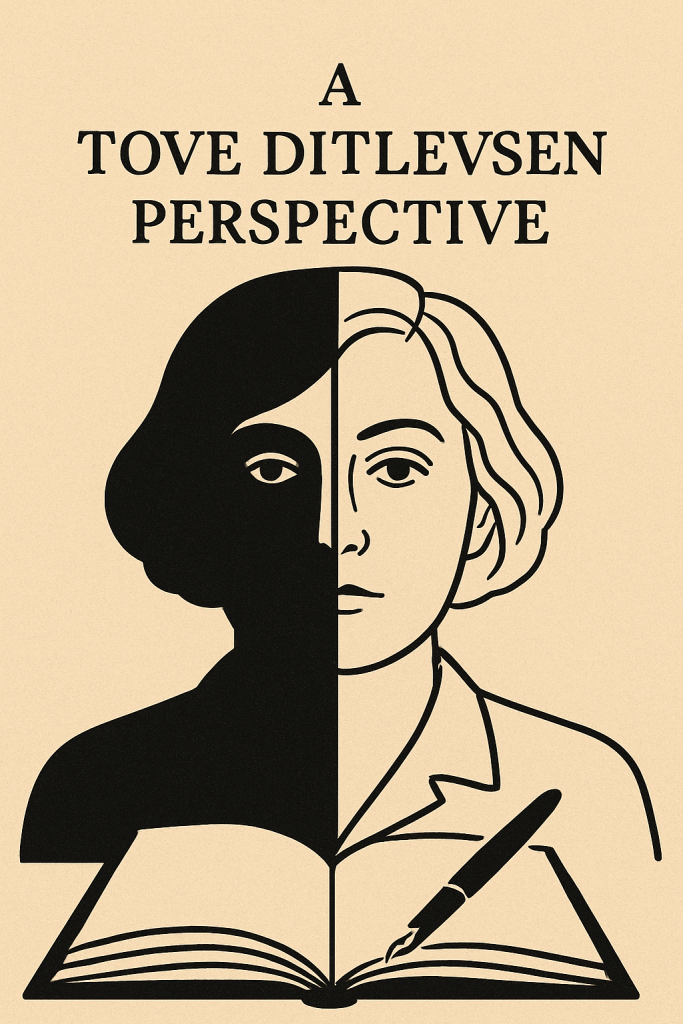
“Childhood is long and narrow like a coffin, and you can’t get out of it on your own,” Tove Ditlevsen wrote in her book, Childhood. To compare one’s childhood to a coffin, a piece of wood underground, suffocated by dirt and roots, is thought provoking, maybe a little peculiar. But this is what has engrossed me fully into Tove’s writing; There is something so familiar about her peculiarity that I find myself in her words.
There is a sting of hatred that Tove writes about when referring to the never endless childhood seems to carry with it. Yet she also grieves the loss of her childhood after graduating school. Like Tove, I too mourned the death of my childhood – an inevitable loss I was not ready to give up, nor did I want it to end. Unlike Tove, my childhood ended, as most, at eighteen, not fourteen. Nevertheless I was riddled with a known sadness I had begun to feel at seventeen, knowing that soon, the only world I have ever known, would be coming to an end.
I have connected with writers before but with Tove, it is more than a connection. Sometimes while reading The Copenhagen Trilogy, I would stop reading and stare at her words in awe; every vowel, every constant was so familiar to me it felt like I was reading my inner thoughts. Tove writes in such an intimate manner, it feels as though you are reading a letter from your best friend. She was marked as the strange girl by her own family and friends, yet to me she doesn’t feel strange at all–she feels like me. From Childhood to her book Youth, she wanted to be understood by people and never was. But I understand her. What she wanted for herself, the emotions she felt as a young girl, I can relate to. Tove’s words come alive with her sentences. Just along the surface of her work, is her life clearly laid in front of a reader. Tove recalls her life with such precision that it plays out in front of you like a movie.
Recently I read in Youth something that hit closer to home than ever, “Meanwhile I am only twenty years old, and the days descend on me un-noticably like dust, each one just like the rest.” I had never come across anything so personal that it was almost like reading something I wrote. A simple yet poignant sentence, being twenty years old myself, experiencing days that come and go in a similar manner, I became more engulfed in the life of a Danish woman, long before my time.
Tove expresses her emotions, becomes vulnerable in a striking way while you can clearly make out exactly what she feels, she strikes you with a degree of depth that leaves you to ponder. Her style of writing is so precise, yet holds the quality of a poem; it’s lyrical and imaginative.
 Le Commune Review
Leave a comment