By Sarah Marin
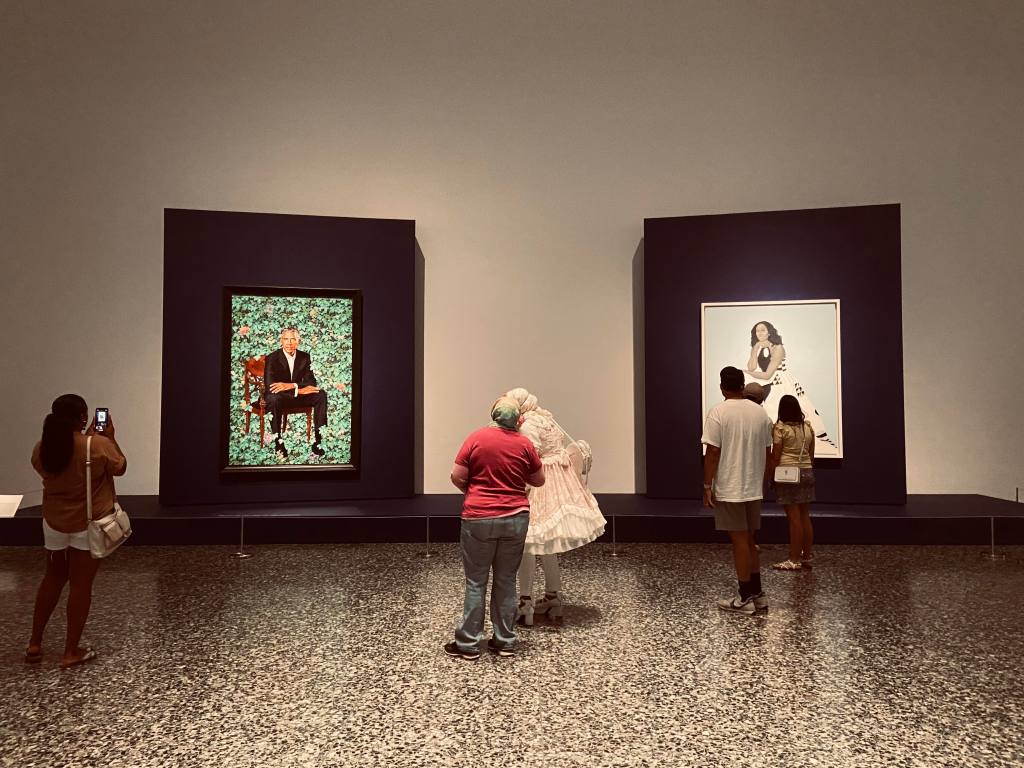
Pablo Picasso once said, “Art washes away from the soul the dust of everyday life.” Perhaps there has never been a moment when these words resonate more deeply than now. We live in a time saturated with noise—political noise, family noise, and the constant flood of unsolicited opinions from every direction. Beyond that external chaos, there is the quiet but relentless noise inside our own minds: the worries, fears, anxieties, and unspoken thoughts we carry. Finding even a single moment in the day to pause, take a deep breath, and decide whether to continue absorbing the noise or seek inner silence can be difficult.
When you step inside a museum, you are immediately enveloped by the cool stillness of the galleries, the faint scent of aged paint and wood, and the profound solitude of silence. An art museum has been a sanctuary for me for as long as I can remember. I wanted my daughter to grow up with that same sense of refuge—surrounded by art, discovering for herself the beauty it holds not only visually, but spiritually. For me, it is the one place where everything washes away and the trials of life shrink into something small and weightless.
Science even supports this experience: neuroscientist Semir Zeki, a pioneer in the study of neuroaesthetics, found that viewing art activates the brain’s reward system, producing responses similar to those felt during love or moments of pleasure. Even a single glance at a work of art can trigger both emotional and cognitive shifts, confirming that the impact of art is not just emotional, but physiological as well.
In the quiet of a museum, surrounded by art, the noise of the world—and the noise within our own minds—can finally fade. For me and for many others, this space offers a chance to pause, reflect, and feel, as both personal experience and neuroscience show that art can transform emotion and thought. It is a reminder that beauty, stillness, and contemplation are not just luxuries—they are essential for the soul.
 Le Commune Review
Leave a comment